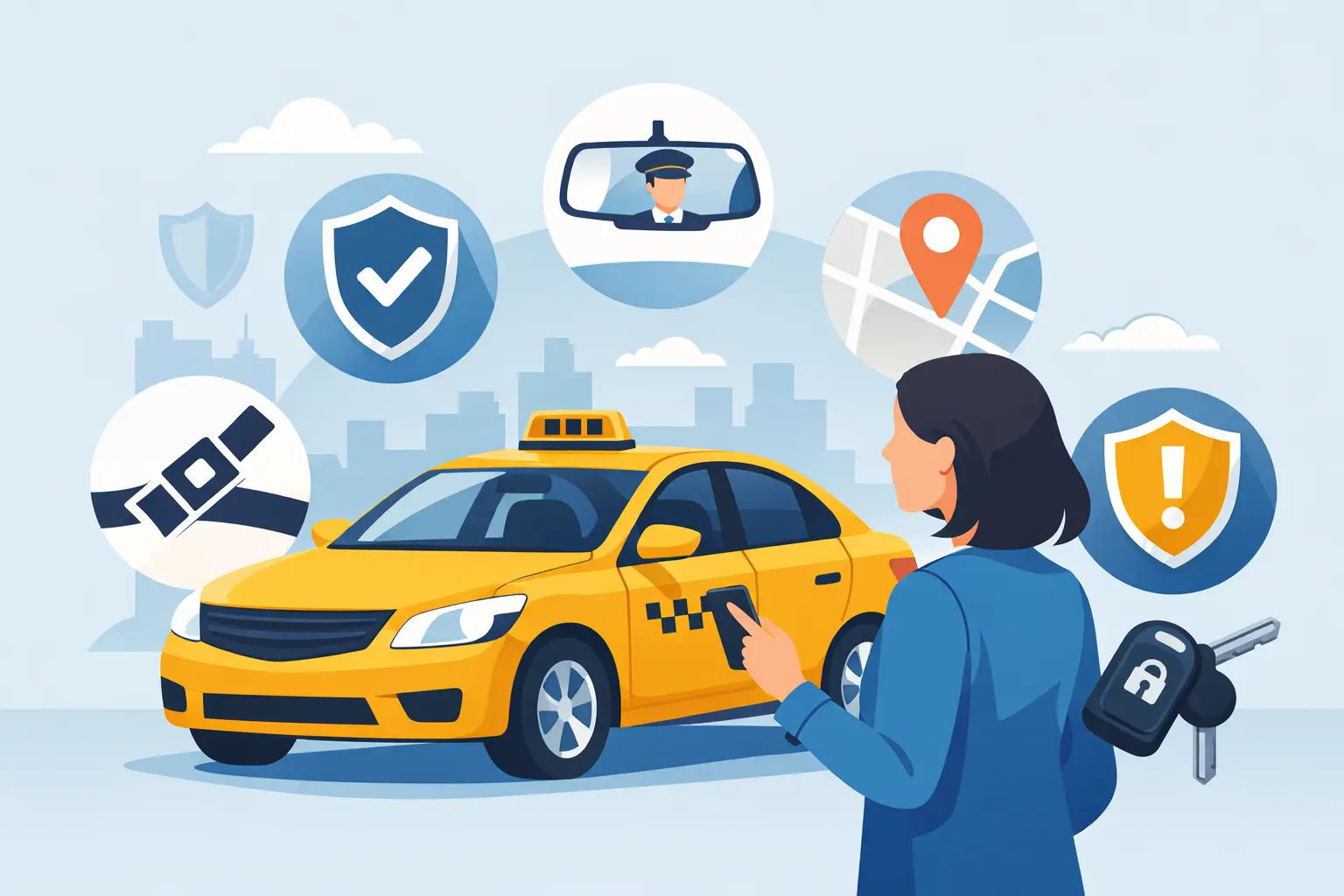

A taxi pulled up, the fare sounded vague, and the car had no clear company marking. That is usually the moment people realize taxi safety is not just about the drive itself. It starts before you open the door.
For travelers arriving in Iceland and for local riders heading across Reykjavík, to Keflavík Airport, or farther out of town, the safest ride is usually the one with the fewest unknowns. You want to know who is driving, what vehicle is coming, how pricing works, and what support exists if plans change. Safety is not one feature. It is the result of verified drivers, maintained vehicles, clear booking records, and a service that stays reachable when you need help.
What taxi safety really means
Many riders think of safety as careful driving alone. That matters, but it is only one part of the picture. Real taxi safety also includes whether the driver is licensed, whether the vehicle is registered and maintained, whether the route and fare are documented, and whether someone can assist you if there is a delay, problem, or lost item.
This is especially relevant in an unfamiliar market. Visitors landing at Keflavík often deal with jet lag, weather, and limited local knowledge at the same time. In that situation, even small gaps in information can create stress. A ride feels safer when the basics are clear from the start - the driver is verified, the car details match the booking, and the fare structure is explained before the trip begins.
Taxi safety starts before the car arrives
The safest taxi booking usually happens before pickup, not at the curb. If you book through a service that confirms the trip in writing, you have a record of the route, pickup time, and vehicle assignment. That record matters if you need to follow up later.
A professional service should make key details easy to verify. You should be able to see the driver or car information, know how the fare is calculated, and understand how to contact support. If none of that is visible, you are being asked to trust too much too quickly.
For airport pickups and late-night rides, this matters even more. A clear booking with dispatch support reduces confusion when flights are delayed or when pickup points are crowded. It also lowers the chance of getting into the wrong vehicle.
How to check taxi safety before you ride
There are a few practical checks that make a real difference. First, confirm that the taxi service uses licensed drivers and verified vehicles. That should not be hidden or hard to find. It is a basic trust signal.
Second, check how pricing works. Transparent fixed pricing for airport transfers or a clearly stated metered fare for city rides is not just about cost. It is also a safety issue because it reduces disputes and uncertainty during the ride.
Third, make sure the service offers a support channel that actually works, especially if you are traveling at odd hours. A 24/7 phone line, app support, or WhatsApp access can be very useful if your pickup is delayed, your flight changes, or you leave a bag in the car.
Finally, look for trip visibility. If the app or booking system shows live tracking, assigned driver details, and trip history, you have a stronger record of what happened and when. That extra layer can be very reassuring for solo travelers, families, and business riders.
Why licensed drivers and verified vehicles matter
Anyone can claim to offer a ride. That is exactly why verification matters.
A licensed driver has met regulatory requirements. A verified vehicle is tied to an actual operating service rather than an informal or unknown arrangement. Those two factors do not guarantee a perfect ride, but they reduce risk in ways that matter: accountability is clearer, service standards are higher, and there is usually a stronger system behind the trip.
Vehicle condition is part of this too. A properly maintained taxi is more than a comfort issue. It affects braking, tires, lights, and overall reliability, especially in Iceland where road conditions and weather can change quickly. A clean, well-kept vehicle often signals a better-managed operation overall.
Taxi safety and fare transparency go together
People often separate safety from price, but riders should not. Unclear pricing creates pressure inside the car. If a rider is unsure what the trip should cost, they may feel stuck, especially after a long flight or in an unfamiliar area.
That is why transparent pricing supports taxi safety. A fixed airport transfer rate gives you certainty before pickup. A metered city ride should follow a known fare structure. If extra waiting time or hourly hire charges apply, those terms should be clear before the trip starts.
The trade-off is simple. Street-hailing may feel faster in some situations, but pre-booking usually gives you better records and clearer fare expectations. For many riders, especially visitors, that added clarity is worth it.
Safer rides for airport transfers
Airport trips deserve extra attention because they happen at the exact moments when people are most tired, rushed, or distracted. Arrivals can be especially vulnerable. You may be carrying luggage, watching for family members, and trying to figure out local transportation after a flight.
For that reason, airport taxi safety should include more than just pickup. It should include flight monitoring or responsive dispatch, clear meeting instructions, confirmation of the assigned vehicle, and support if schedules change. Without those systems, a simple delay can turn into confusion.
Families with children, solo travelers arriving late, and business travelers on tight schedules usually benefit most from pre-arranged airport service. When the trip is confirmed in advance, there is less guesswork at the terminal and less temptation to accept a ride from a source you cannot properly verify.
What riders should notice at pickup
When the car arrives, take a few seconds to confirm what you are stepping into. The vehicle should match the booking details. If a driver name or car plate was provided, check it. If something does not match, ask before entering.
You should also pay attention to how the driver handles the start of the trip. Professional drivers usually confirm the destination, help with luggage when appropriate, and begin the ride without making the fare feel uncertain or improvised. If the interaction starts with confusion, that is worth noticing.
Inside the car, normal signs of a professional operation include a clean cabin, working seat belts, and a calm, direct approach. None of this needs to feel complicated. In fact, the safest rides are often the least dramatic because the basics are handled properly.
Taxi safety for solo travelers and late-night rides
Solo riders often have slightly different concerns. They may want a visible booking record, live trip tracking, and a simple way to share ride details with someone else. Those are practical protections, not extras.
Late-night trips add another layer. You may have fewer transport options, and support availability matters more. A service with around-the-clock dispatch is better positioned to solve problems quickly if the driver is delayed, the pickup point is busy, or the route changes.
If you are traveling alone, it is usually smart to book digitally rather than rely on an unplanned ride. The digital record creates accountability. It also makes follow-up easier if anything goes wrong.
Choosing convenience without giving up safety
The good news is that convenience and taxi safety do not have to compete. A modern booking process can improve safety when it includes driver verification, trip tracking, fare clarity, and active support. Fast booking is useful, but only when the service behind it is accountable.
That is why many riders now prefer booking through a platform that confirms the trip, stores ride history, and keeps support accessible. Flott Taxi Iceland is one example of that approach, combining licensed drivers, verified vehicles, transparent fares, and 24/7 support with easy mobile booking.
If you need a taxi in Iceland, the safest choice is usually the one that tells you exactly who is coming, how the trip is priced, and who will help if plans change. A good ride should feel straightforward before it ever feels fast.